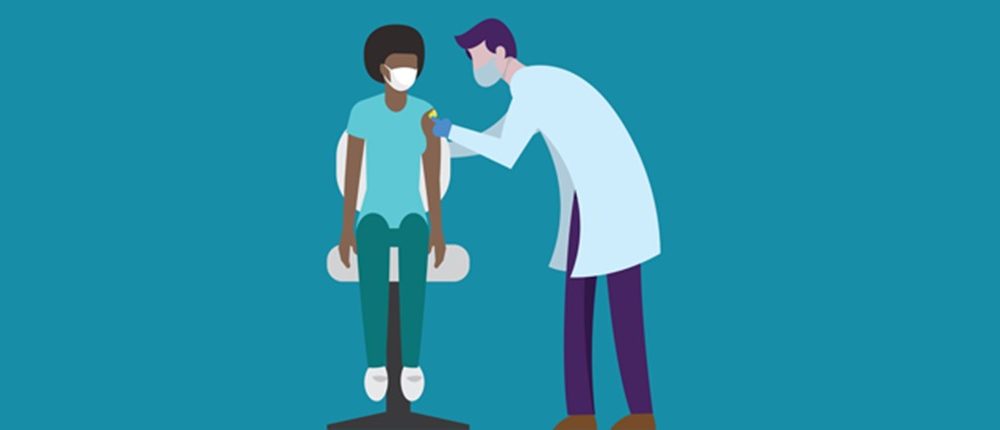
COVID-19 vaccines are effective at protecting you from getting sick. Based on what we know about COVID-19 vaccines, people who have been fully vaccinated can start to do some things that they had stopped doing because of the pandemic.
We’re still learning how vaccines will affect the spread of COVID-19. After you’ve been fully vaccinated against COVID-19, it’s important to keep taking precautions—like wearing a mask, staying 6 feet apart from others, and avoiding crowds and poorly ventilated spaces—in public places until we know more.
These recommendations can help you make decisions about daily activities after you are fully vaccinated. They are not intended for healthcare settings.
Are you fully vaccinated?
People are considered fully vaccinated:
- 2 weeks after their second dose in a 2-dose series, such as the Pfizer or Moderna vaccines, or
- 2 weeks after a single-dose vaccine, such as Johnson & Johnson’s vaccine
If you don’t meet these requirements, you are NOT fully vaccinated. Keep taking all precautions until you are fully vaccinated.
If You’ve Been Fully Vaccinated You Can:
- Visit inside a home or private setting without a mask with other fully vaccinated people of any age.
- Visit inside a home or private setting without a mask with one household of unvaccinated people who are not at risk for severe illness.
- Travel domestically without a pre- or post-travel test.
- Travel domestically without quarantining after travel.
- Travel internationally without a pre-travel test depending on destination.
Travel internationally without quarantining after travel.
To learn more: visit www.cdc.gov





 As we continue to deal with the uncertainty of COVID-19 and all it brings, one of my favorite quotes comes to mind, “In a world where you can be anything, be kind.” This is so true right about now! I love reading about the many stories of generosity and examples of grace that are being shown in a time where life is a bit upside down.
 SEMAAA was the recipient of CARES ACT funds to be used in the areas of supportive services and caregiver supports. In this addition we feature some of the wonderful projects that are being funded to help to connect seniors and their caregivers to technology to help combat social isolation and mental health support services to ensure the safety and well-being for older adults in our region. A big thanks to the collaborators for these projects that have stepped up to increase capacity and service provision in this time of need.
 Cares Act Funds originated with the Administration for Community Living, are sub-granted to the MN Board on Aging and are then allocated to the Area Agencies on Aging across the state, where we award them to local providers. These funds are to be used to address the needs of older adults and caregivers resulting form the COVID-19 pandemic.
 The University of MN is looking for families and individuals dealing with memory loss to take part in a new study. This program is aimed at providing support to families and their loved ones to help them navigate the transition to driving retirement. Dr. Joe Gaughler and a research team have a goal of working with 20 families to start this pilot and refine it. Eventually they hope to open it up to more families across the state.